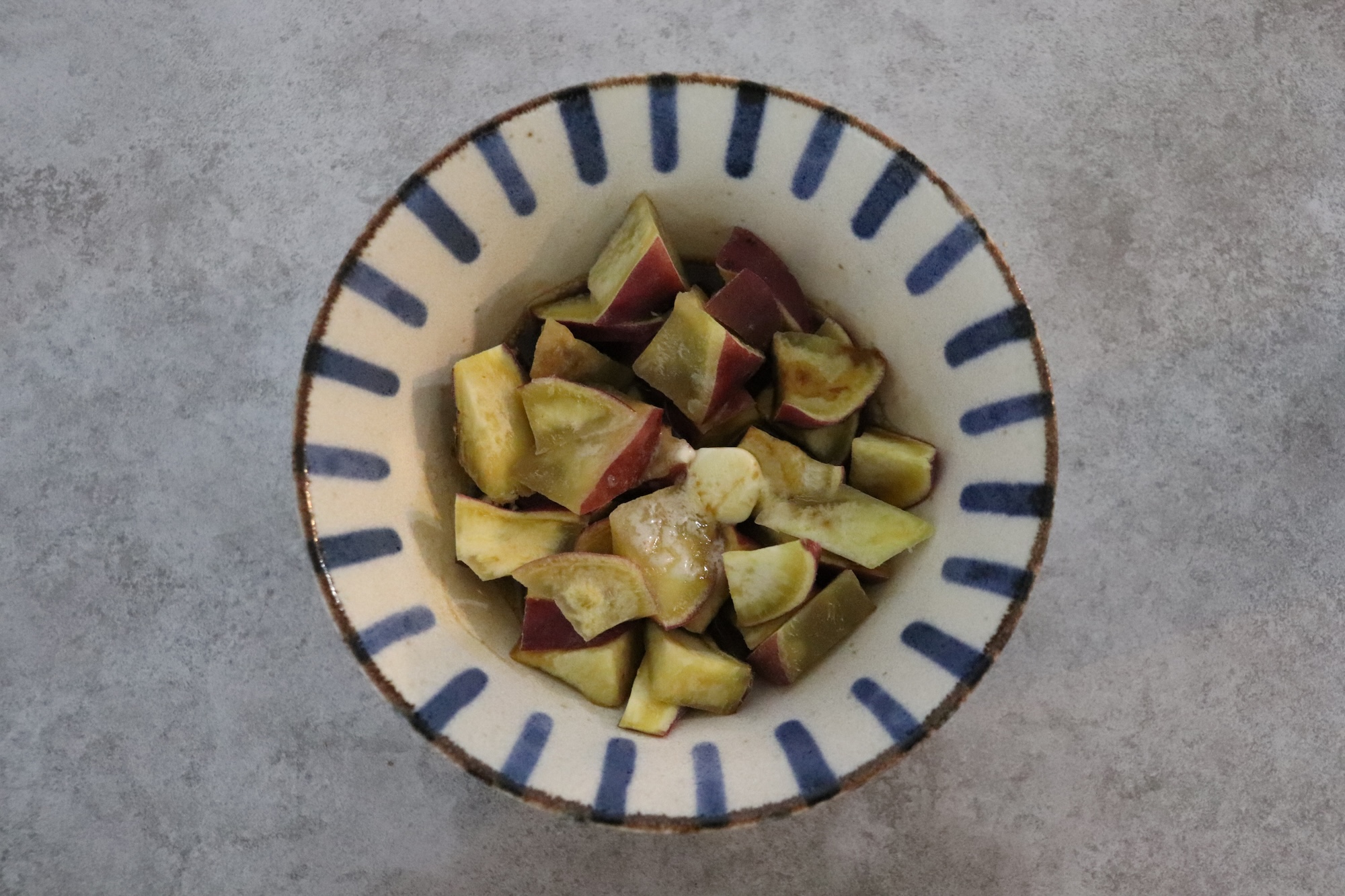
Sweet potato desserts exist in every food culture, including Japan. There are rich, indulgent sweets—and there are quieter ones, designed with restraint.
This sweet potato Japanese recipe belongs to the latter. Instead of adding more sweetness, it reveals depth by pairing gently cooked sweet potato with soy sauce, a fermented seasoning usually associated with savory dishes.
This is one of those sweet potato recipes that does not aim to impress loudly, but to help you understand how Japanese fermentation quietly structures flavor.
Japanese Sweet Potato Dessert with Soy Sauce Butter
Ingredients
Method
- Cut the sweet potatoes into bite-sized pieces and place in a heat-resistant container. Then add enough water to cover the sweet potatoes.
- Heat in the microwave at 600W for 5 minutes.
- Once the sweet potatoes are soft, add the butter and heat at 600W for 10 seconds at a time, removing it when it begins to melt.*If the sweet potato is still hard, heat it at 600W for an additional 30 seconds at a time until it becomes soft.
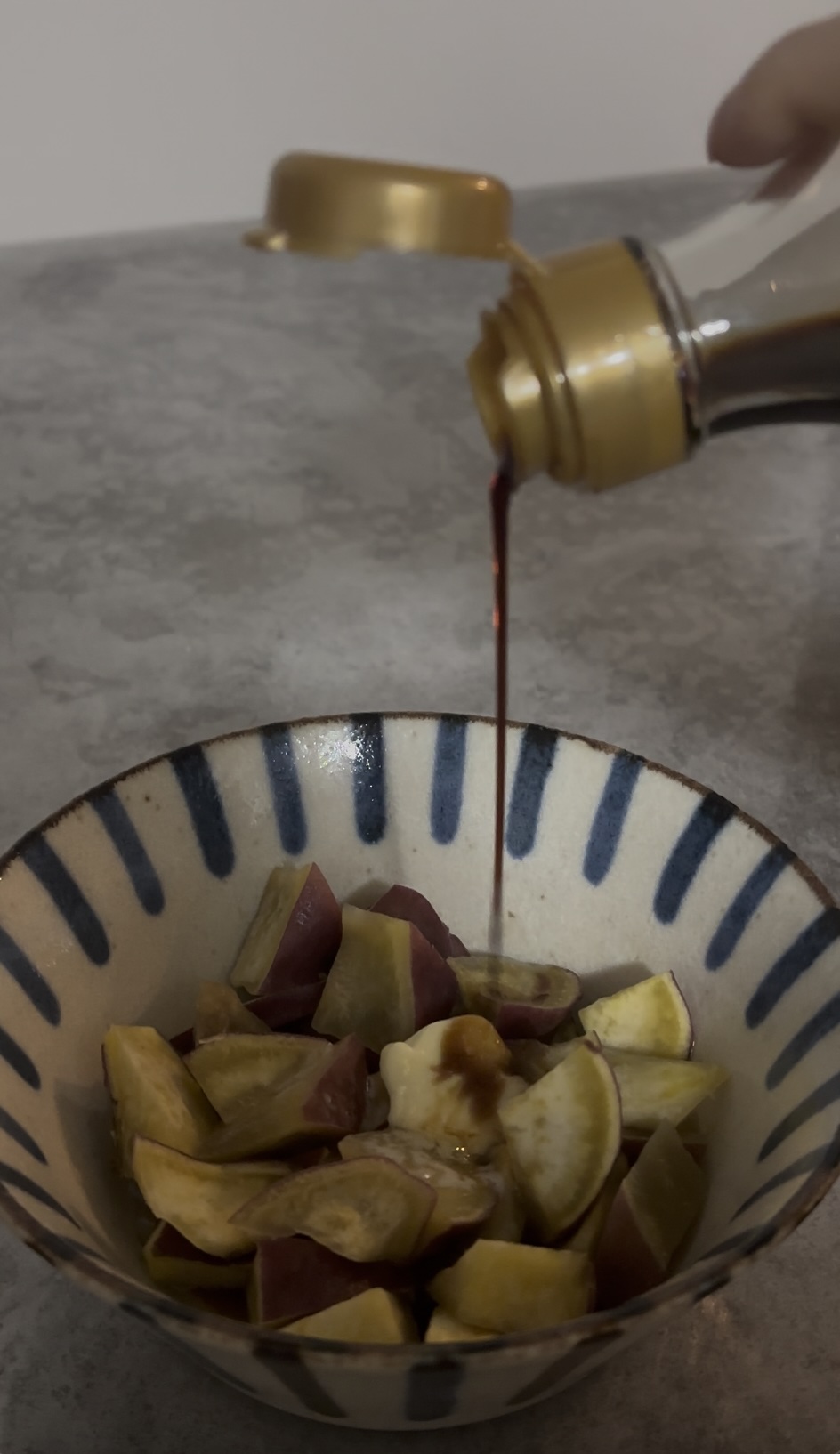
- Pour the soy sauce over the butter, mix everything together to evenly distribute the flavor, and it's done.
Notes
Fermentation Tip
In this recipe, butter provides animal-based umami and richness, while soy sauce contributes fermented amino acids and aroma. By adding soy sauce after heating, its volatile compounds remain intact, allowing you to taste fermentation as fragrance rather than saltiness. This contrast—warm fat and uncooked fermentation—is a common structure in Japanese flavor design. All “耀 Hikari” recipes use naturally fermented seasonings made using traditional methods. If you use machine-made seasonings, use 1.2 to 1.5 times the amount of seasoning.Serving Notes
- This sweet potato Japanese dessert is best served warm, when fermentation aromas are most expressive.
- Pair with unsweetened Japanese tea to experience how soy sauce contributes depth rather than saltiness.
If this way of using soy sauce in sweet potato recipes feels new, you may enjoy exploring Japanese fermentation more deeply. We occasionally share quiet insights on fermented food and structure through our newsletter. When you visit Japan, you are also welcome to experience fermentation in person through our small, focused programs and experience.
No responses yet