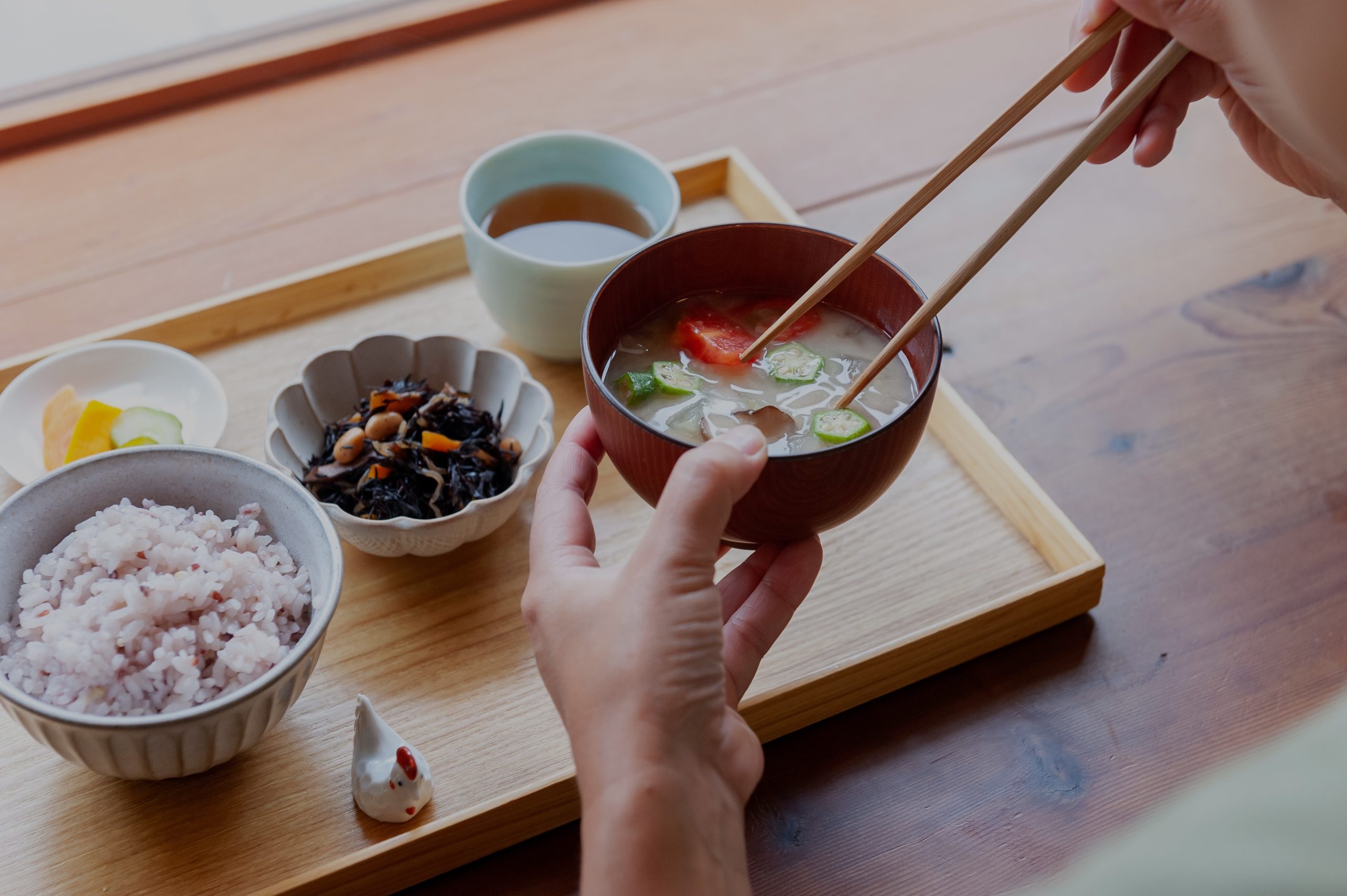
Japanese food culture is often described with familiar words: healthy, traditional, seasonal. These descriptions are not wrong—but they are incomplete.
When travelers, cooks, or food lovers encounter Japanese cuisine, they usually meet it through dishes. Sushi, ramen, tempura. Delicious, memorable, and easy to recognize. Yet behind these dishes lies a quieter logic that is rarely explained.
This article approaches Japanese food culture not as a list of recipes or a historical timeline, but as a structure—a set of recurring choices shaped by environment, ingredients, and ways of eating. By understanding this structure, the food of Japanese culture begins to make sense beyond individual dishes, offering a deeper and calmer way to engage with washoku.
What Do We Mean by Japanese Food Culture?
There is no single, official definition of Japanese food culture. Depending on the source, it may be explained through history, nutrition, religion, or aesthetics. As a result, explanations of the food of Japanese culture often feel fragmented.
In this article, Japanese food culture is not defined in a fixed way. Instead, it is viewed through a structural lens.
This perspective asks different questions:
- How are meals organized?
- What role do staple ingredients play?
- How does the environment shape food choices?
- Why do certain patterns repeat across regions and dishes?
By focusing on structure rather than labels, Japanese food culture becomes easier to understand—especially for those who want more than surface-level explanations.
Key Elements That Shape Japanese Food Culture
When viewed structurally, several elements consistently shape Japanese food culture. These elements do not work independently; they function together, influencing how food is prepared, combined, and eaten.
The following sections explore four core elements that appear repeatedly across the food of Japanese culture.
Rice as the Structural Base of Japanese Food Culture
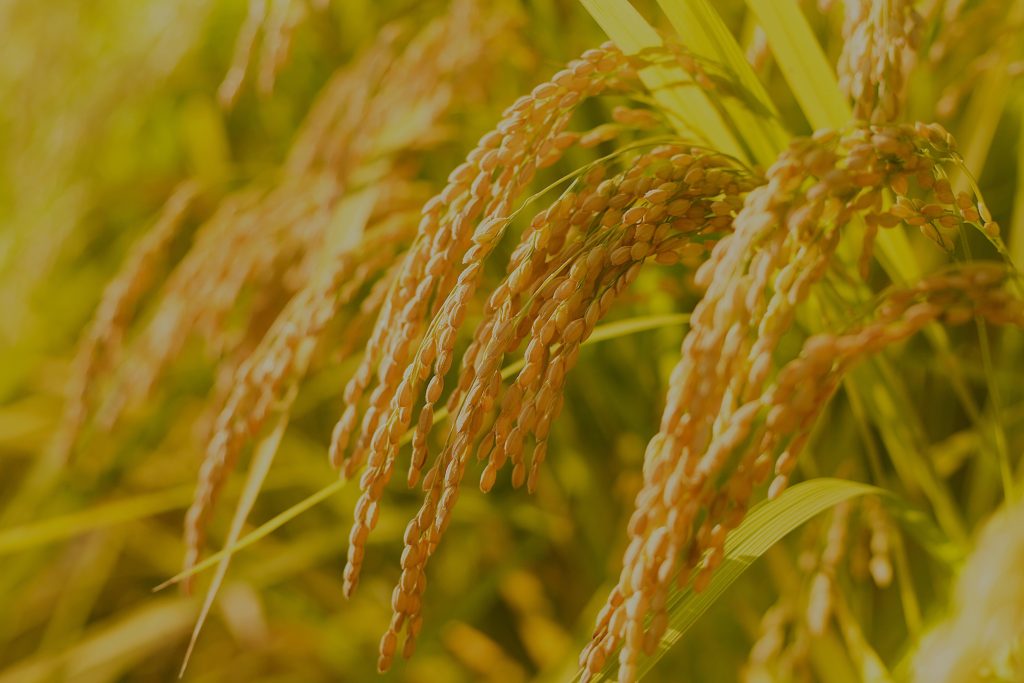
Rice is often described simply as Japan’s staple food. Structurally, its role is far more important. In Japanese food culture, rice functions as a reference point. Its neutral flavor sets the baseline against which other tastes are adjusted. Salty, fermented, sour, or aromatic elements are rarely meant to overpower rice, but to accompany it.
Rice also forms the foundation of many fermented foods—koji, sake, vinegar—linking daily meals to broader fermentation practices. Even when rice is not the main ingredient on the plate, its presence shapes portion size, seasoning intensity, and meal balance.
Understanding Japanese food culture without understanding rice is nearly impossible, because rice quietly anchors the entire system.
Seasonality in Japanese Food Culture

Seasonality is one of the most visible aspects of Japanese food culture. Menus change, ingredients appear briefly, and certain foods are associated with specific times of year.
This emphasis on seasonality begins with the environment. Japanese clear seasonal transitions influence what grows, what is available, and how food is perceived. Rather than aiming for constant availability, the food of Japanese culture traditionally adapts to change.
Seasonality in Japanese food culture is not about strict rules. It is about attunement—adjusting meals to temperature, freshness, and timing. This sensitivity affects not only ingredients, but also cooking methods, portion sizes, and even presentation.
Preservation and Fermentation in Japanese Food Culture

Before modern refrigeration and transportation, food preservation was essential. Drying, salting, and fermenting allowed ingredients to be used beyond their harvest period and across distances.
From this necessity, a rich range of preserved foods developed within Japanese food culture. Over time, however, preservation methods—especially fermentation—evolved beyond survival.
Fermented seasonings such as miso, soy sauce, vinegar and so on are no longer used simply to keep food edible. They function as tools for adjustment: softening flavors, adding depth, connecting ingredients, and shaping aroma.
From our perspective at 耀 Hikari, fermentation in Japanese food culture is best understood as a technique, not a category of food. By observing how fermented seasonings are used—when, where, and in what quantity—it becomes possible to apply them flexibly, rather than following fixed recipes.
We explore these observations more fully in the 耀 Hikari Journal, where fermentation is approached through attention, not instruction. This technical view reveals why fermentation remains central to the food of Japanese culture today.
Meal Structure in Japanese Food Culture
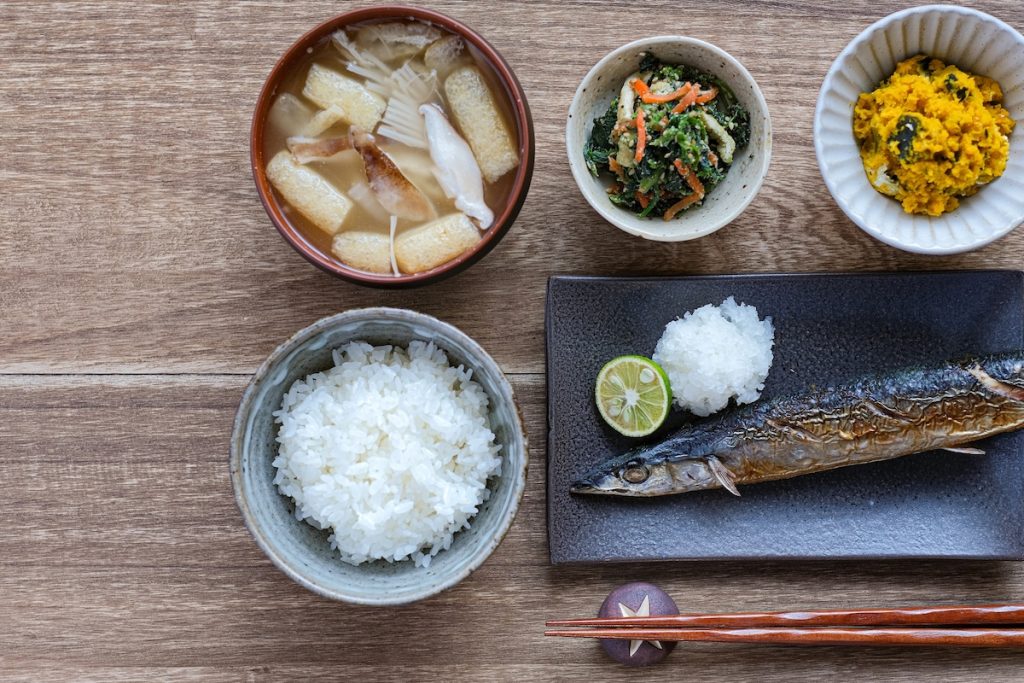
One of the most distinctive features of Japanese food culture is meal structure. Rather than centering everything on a single dish, meals are typically composed of several smaller elements.
The classic soup, main, and side dish arrangement creates balance on multiple levels—nutrition, cooking methods, seasoning, temperature, and texture. Structurally, it spreads intensity across the meal, allowing each component to stay clear while the whole feels steady and complete.
This approach prevents any one element from becoming overwhelming. It also allows contrast and rhythm: warm and cool, light and rich, simple and complex. Even when modern meals simplify this structure, its influence remains visible in the food of Japanese culture.
Japanese Food Culture as a System, Not a List of Dishes
Japanese food culture is often approached through familiar dishes or simplified images. Yet, as seen throughout this article, it becomes clearer when understood not as a collection of recipes, but as a system shaped by recurring choices and patterns.
Rice sets a reference point, seasonality guides timing and selection, preservation and fermentation refine flavor and use, and meal structure distributes balance across the table. Together, these elements form a way of thinking that quietly organizes how food is prepared, combined, and experienced.
Seen this way, the food of Japanese culture is neither a fixed tradition nor a set of rules to memorize. It is a living system—one that can be understood by noticing structure, rather than listing dishes.
If you’d like to continue this kind of quiet understanding, our mailing list shares new essays and observations—and when you’re in Japan, our fermentation experiences and culinary study programs offer time to taste these patterns firsthand.
No responses yet