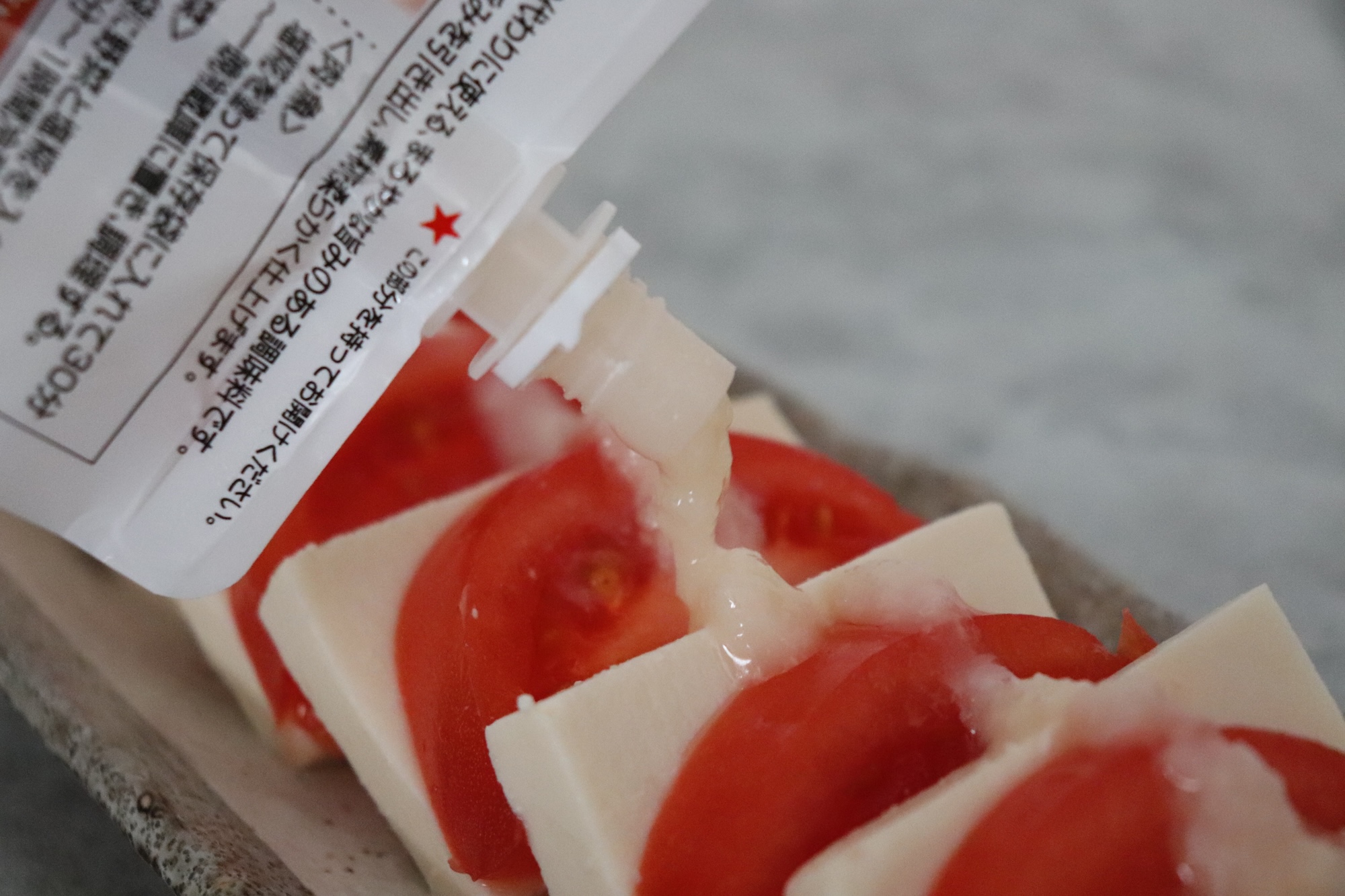
Many people search for a tofu recipe hoping to make tofu more flavorful. In Japanese cooking, tofu is not meant to be transformed—it is meant to be understood.
This tofu caprese recipe uses shio koji (salt koji) instead of salt, showing how fermentation adds quiet sweetness and structure rather than intensity. It is a tofu recipe vegan, tofu recipe healthy, and no-cook—a calm introduction to what is koji, and how it gently reshapes taste.
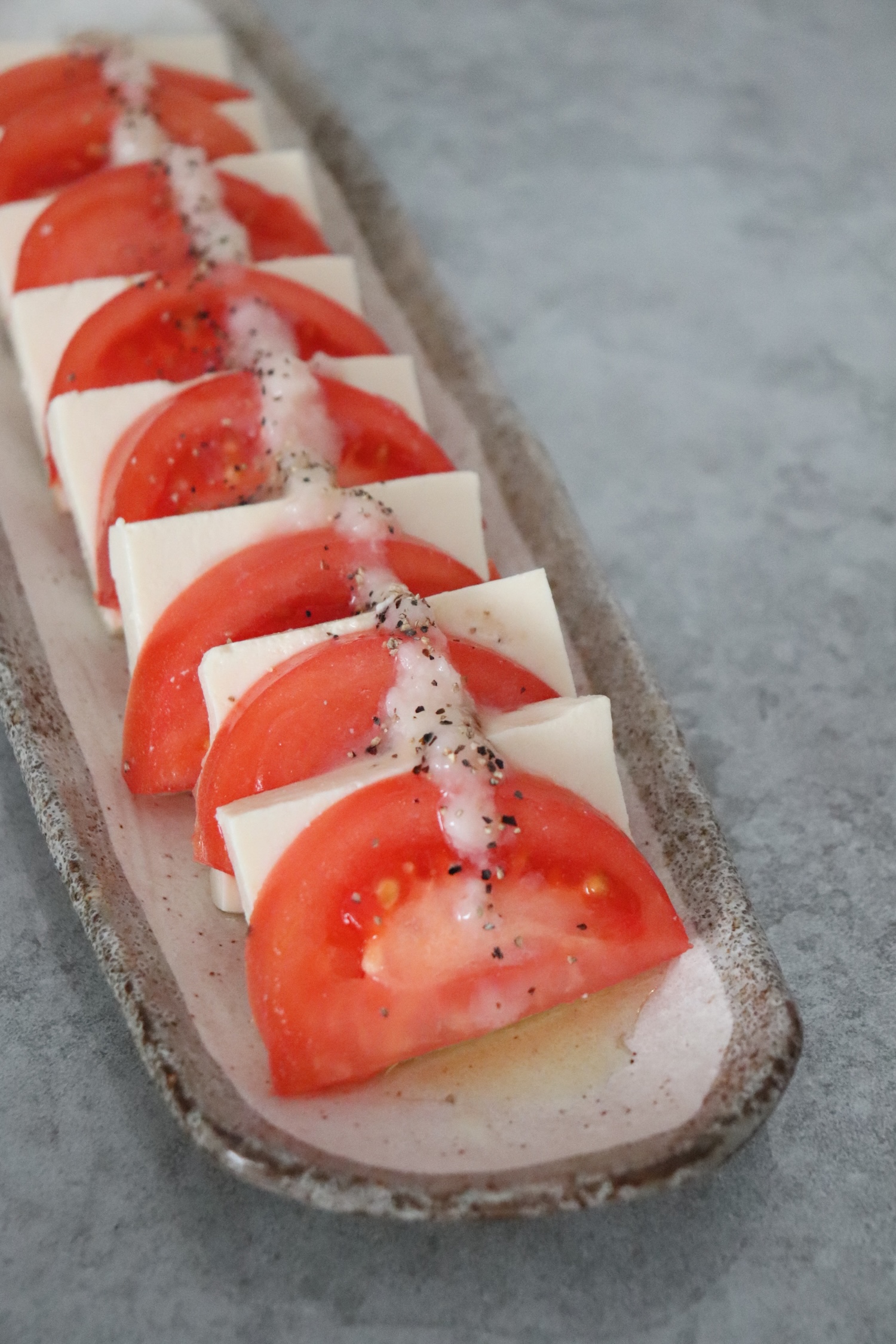
Tofu Caprese with Shio Koji (Salt Koji)
Ingredients
Method
- Prepare the ingredients. Gently drain the tofu and slice it into 1–1.5 cm (½ inch) thick pieces.Slice the tomatoes into 1–1.5 cm (½ inch) thick pieces and half.
- Arrange tofu and tomatoes alternately on a plate, following a caprese recipe layout.
- Drizzle olive oil and shio koji evenly over the tofu and tomatoes, optional black pepper.
Notes
Fermentation Tip
Using shio koji (salt koji) instead of salt adds a gentle sweetness derived from fermentation. Unlike salt, shio koji spreads softly across the ingredients, creating a more even and integrated seasoning. Shio koji also pairs naturally with olive oil. The oil carries aroma, while the fermented enzymes of koji soften sharpness and round the overall flavor—a quiet balance that works especially well in no-cook dishes. All “耀 Hikari” recipes use naturally fermented seasonings made using traditional methods. If you use machine-made seasonings, use 1.2 to 1.5 times the amount of seasoning.Serving Notes
- This tofu caprese is best served chilled or at room temperature. Because it is a no-cook shiokoji recipe, the subtle balance created by fermentation remains undisturbed.
- For variation, you may add fresh herbs such as basil or rosemary to layer a gentle aroma. You can also turn this dish into a light salad by adding baby greens or mixed leaves.
This tofu recipe shows how Japanese fermentation allows tofu to be light, modern, and expressive. Understanding what is koji begins not with theory, but with how it quietly changes taste. If you’d like to explore that structure further, our fermentation letters and experiences (culinary study and making rice koji and cooking class and so on) in Japan continue the conversation.
No responses yet