When the Recipe Stays the Same, Fermentation Becomes Visible
This reflection comes from within a fermentation-focused kitchen in Japan, where miso is used daily and rarely explained. When a dish tastes different, we tend to look for obvious reasons. A new ingredient. A different technique. A small adjustment at the end. In many Japanese kitchens, however, change often comes from somewhere else.
The recipe stays the same.
The ingredients stay the same.
The method stays the same.
Only the miso changes.
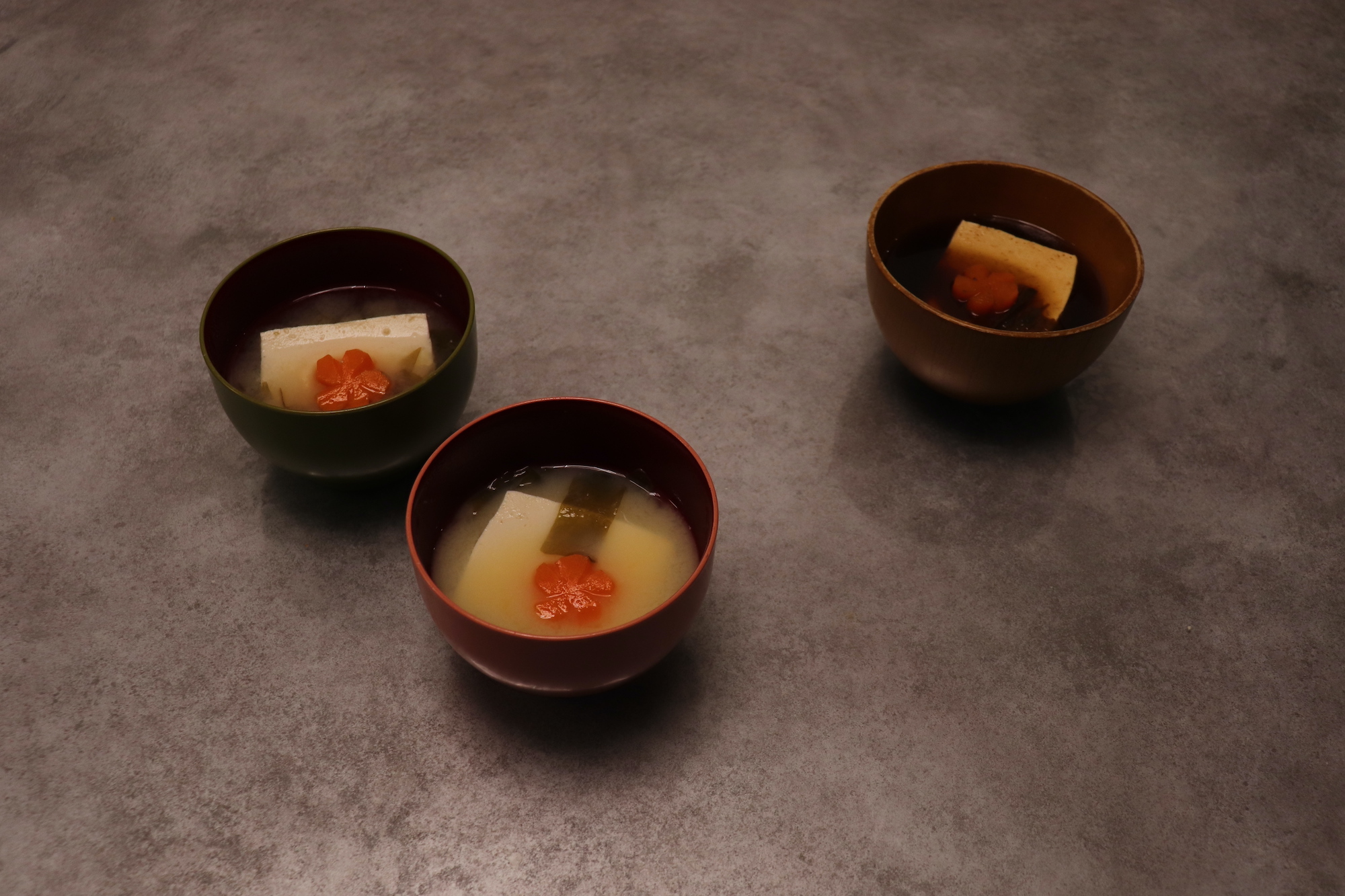
This is not a test or a comparison. I did not try to control every variable or isolate causes. I simply cooked the same miso soup three times—and paid attention to what appeared.
Not to decide what was correct.
Only to notice what became visible when nothing else moved.
The Setup: One Soup, One Pot, One Set of Ingredients
The conditions were kept intentionally simple.
One pot.
One broth.
One set of ingredients.
One familiar sequence of steps.
This was not done to exaggerate differences, but to avoid creating them.
By refusing to adjust seasoning, timing, or technique,
the role of miso was allowed to surface quietly—without interference.
In Japanese cooking, this kind of restraint is common.
Selection happens before cooking begins.
What remains at the stove is observation.
Three Types of Miso, Three Quietly Different Soups
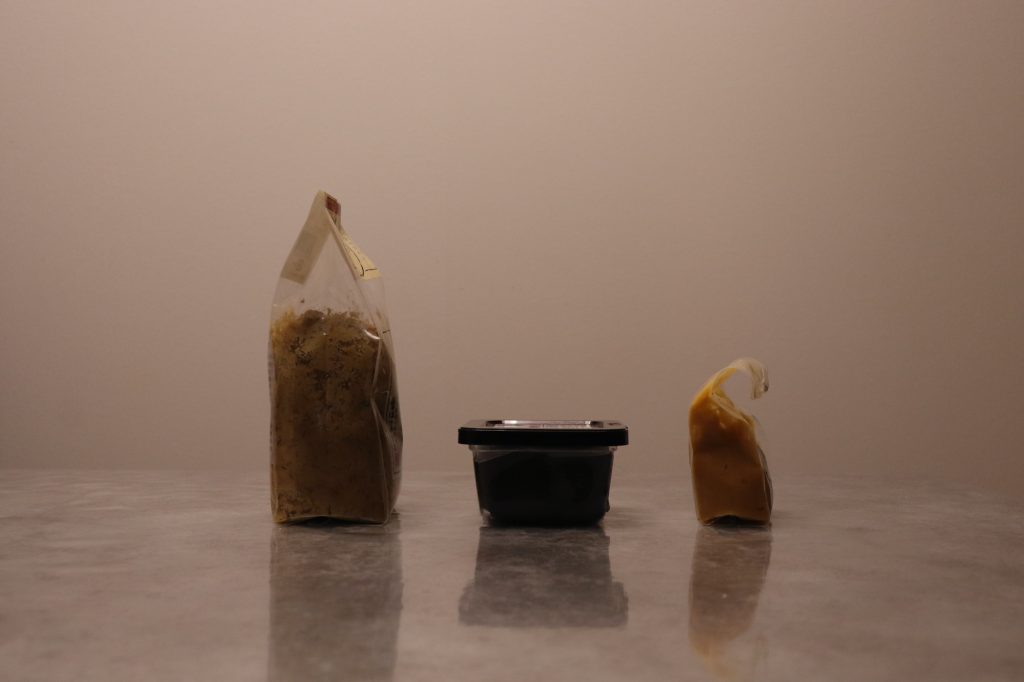
What follows is not a comparison.
There is no scale, no ranking, no conclusion to be drawn.
These are simply three moments, placed next to each other.
Miso 1: Light and Young
In this stage, the experience unfolded not all at once, but gradually, guided by heat and time.
With white miso, the surface remained quiet. Little announced itself at first, after 2-3 seconds, yet warmth drew the flavor outward, allowing it to bloom gently across the palate. What followed was not an echo, but a calm continuation that stayed after swallowing.
With barley miso, a faint suggestion appeared before tasting. As the soup settled in the mouth, after 2-3 seconds, warmth carried its presence outward, filling the space without urgency. The sensation lingered softly, as if unwilling to leave too quickly.
With red miso, the opening was immediate. Its presence arrived early after 1 seconds, clear and sharply, before relaxing into a broader sensation that moved through the mouth. The initial intensity gave way to a quieter spread.
Miso 2: Balanced and Familiar
Attention here shifted toward how the soup behaved as a whole.
With white miso, a gentle smoothness formed the base of the bowl. Tofu settled easily into that softness, as if supported from within. Carrot and wakame, however, remained more outspoken, each retaining a clear presence of its own. The miso did not intervene; it stayed beneath the surface, allowing the ingredients to express themselves freely while quietly sustaining the whole.
With barley miso, the atmosphere carried a subtle sense of direction. Its character was present, yet it also offered a light framework that kept the soup from drifting apart. Tofu found a natural place within this structure, while carrot and wakame moved through with slightly more definition. Carrots might blend in well with the other ingredients if given enough time and cooked slowly.
With red miso, the center of gravity shifted. The ingredients seemed to exist within the miso’s field, wrapped in its depth and tone. This created a feeling of cohesion, though the miso’s presence remained clearly perceptible, shaping the experience more assertively than the ingredients themselves.
Miso 3: Deep and Aged
As the soup cooled, new qualities came into view.
With white miso, warmth prolonged the sensation on the palate, accompanied by a subtle density. When the steam faded, the impression shortened, leaving behind a cleaner finish.
With barley miso, the transition followed a gentle release. Heat sustained the flavor, while cooling allowed it to withdraw smoothly, without residue.
With red miso, the passage of time altered the impression more distinctly. As temperature dropped, the sharp edges softened, and a sense of cohesion emerged. After the meal, the memory it left was light, regardless of warmth.
Nothing Else Changed, Yet Everything Felt Different
I’ve said it many times before,
The technique did not change.
The ingredients did not change.
The process did not change.
Yet the experience did.
Only here does the word fermentation begin to feel necessary
—not as an explanation, but as a name for what resists adjustment.
Fermentation does not respond to last-minute decisions.
It reflects choices made earlier, and time that cannot be hurried.
When nothing else is altered, miso reveals this quietly.
This Is Why Japanese Fermentation Is Chosen, Not Designed
In Japan, families often use different miso—not because they follow different recipes,
but because miso is not something recipes control.
Miso is something that already exists in the kitchen.
It is inherited, purchased, shared, or simply always there.
This is why Japanese fermentation culture places less emphasis on customization at the stove,
and more emphasis on living with one ferment over time.
The recipe does not dominate the household.
The miso quietly does.
If you are interested in how this plays out in everyday Japanese kitchens,
we explore this further in article ” A Day of Japanese Fermentation Culture“
What You Can Take from This—Even Without Miso
You do not need the same miso.
You do not need the same ingredients.
You do not need the same results.
The point is not reproduction.
The point is perspective.
Instead of making fermented food the star,
try letting it stay constant.
Use it again.
And again.
Without adjusting.
Notice what changes—not in the dish, but in your perception.
Fermentation does not demand attention.
It waits for observation.
When You Stop Adjusting, Fermentation Speaks
You do not need to fully understand fermentation to work with it.
Observation is often enough.
But sometimes, after watching quietly, a different kind of curiosity appears
—not the desire to control, but the desire to understand where this way of thinking comes from.
In Japan, fermentation is rarely explained first. It is lived with, repeated, and absorbed over time.
This is why learning often happens not through instruction alone, but through immersion
—by cooking, tasting, and sharing meals in the place where these foods belong.
If that moment of curiosity arrives, there are ways to step into it
—through short-term culinary study, fermentation-focused programs,
or simply spending time with the foods themselves in Japan.
Until then, observation is enough.
Fermentation will continue to speak—whether you analyze it or not.
Find out more in our newsletter.
No responses yet