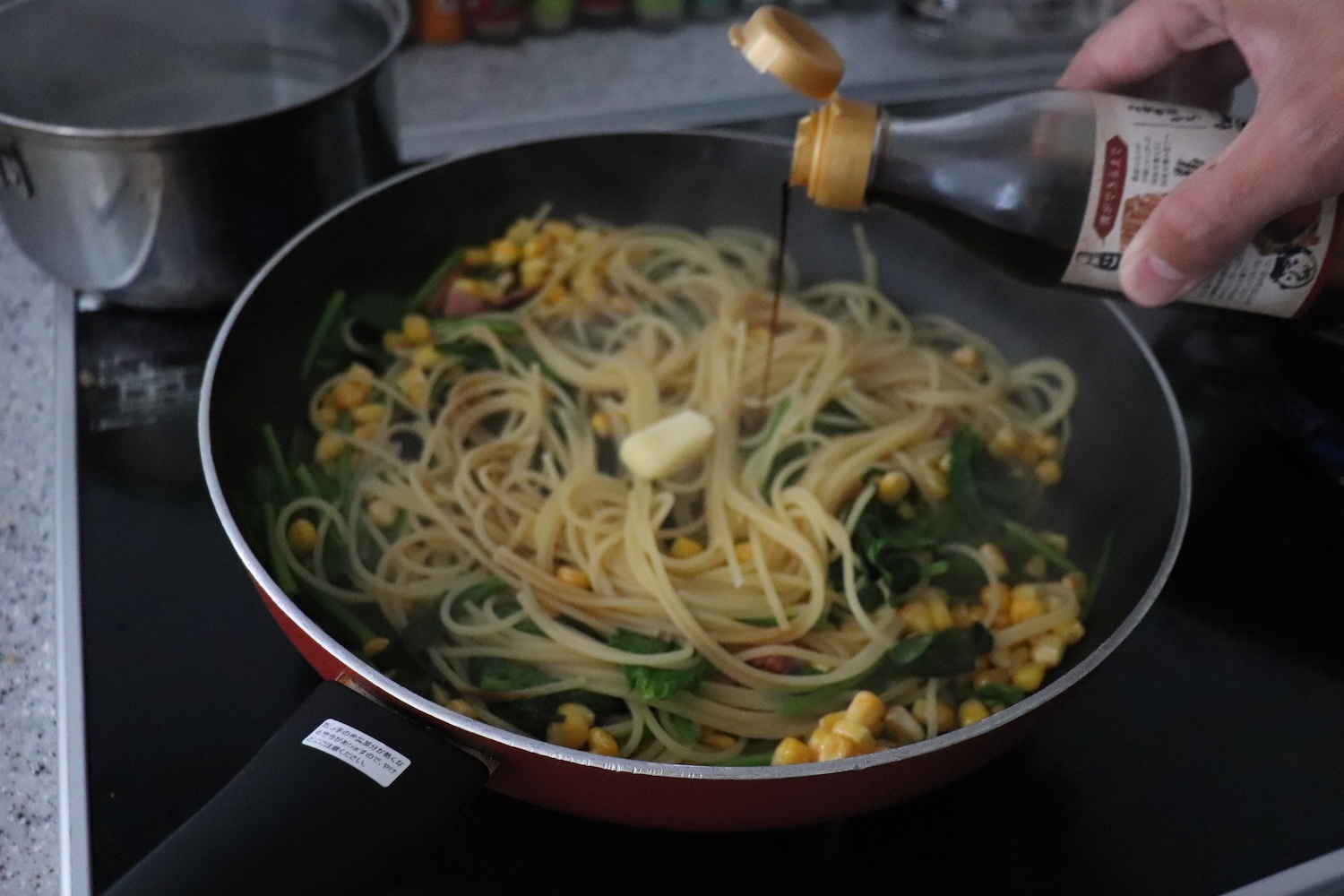
Pasta is often finished with fat—
sometimes olive oil, sometimes butter.
Each choice changes
how the noodles hold flavor and aroma.
When butter is used,
it tends to soften the edges of the dish.
Yet something subtle often remains open,
especially in simple pasta meals.
It is at this point
—when soy sauce is added together with butter at the end—
that the balance shifts.
Salt does not lead.
Aroma does not dominate.
Instead, the pasta settles.
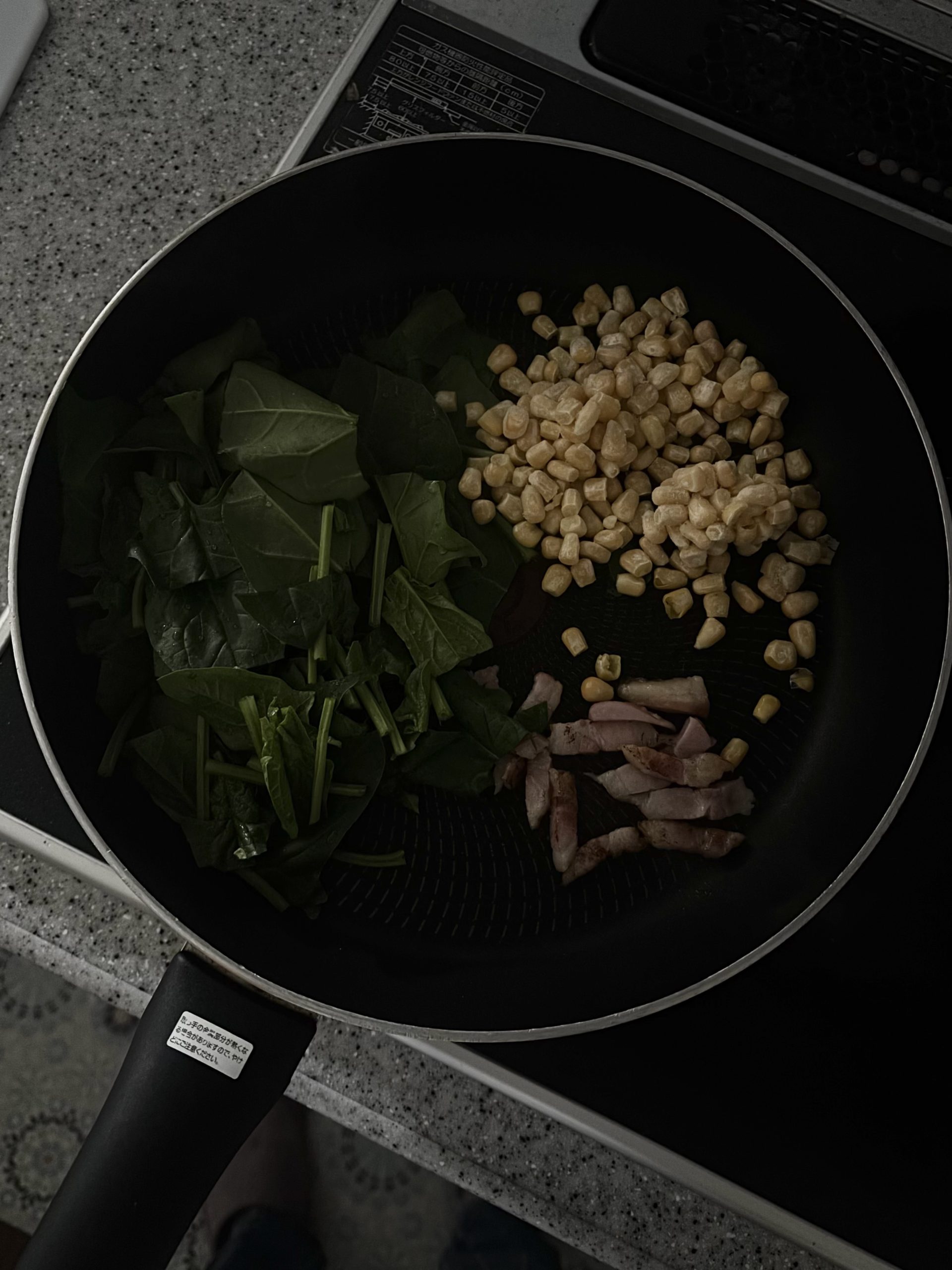
Soy Sauce Butter Pasta
A simple soy sauce butter pasta with garlic, bacon, and spinach, where fermentation deepens flavor without overpowering the dish.
Ingredients
Method
- Prepare the ingredients. Finely chop the garlic. Slice the chili into thin rounds. Cut the bacon and spinach into bite-sized pieces, about 2–3cm (1 inch) wide.
- Bring a large pot of water to a boil. Add salt and cook the pasta until 1 minute before the time indicated on the package.
- While the pasta is cooking, prepare the sauce.Add olive oil to a pan, place the garlic and chili into the oil, and heat gently over low heat to release aroma without browning.
- Increase to medium heat. Add the bacon and cook until lightly browned on both sides. Add the spinach and corn, and cook briefly until just wilted.
- Add the cooked pasta and about 50ml of pasta cooking water to the pan. Toss to combine.
- Reduce heat to low. Add the butter and soy sauce, mixing gently until the butter melts and coats the pasta evenly. Finish with black pepper and serve immediately.
Notes
Fermentation Tip
Naturally fermented soy sauce integrates through aroma and umami rather than sharp salinity, making it suitable for delicate pasta sauce preparations. All “耀 Hikari” recipes use naturally fermented seasonings made using traditional methods. If you use machine-made seasonings, use 1.2 to 1.5 times the amount of seasoning.Serving Notes
- Serve immediately, while the butter remains fluid and the aroma intact.
- Avoid heavy toppings or additional sauces; this dish is designed to stay balanced.
- If adding cheese, use a small amount and add it off heat to preserve aroma.
- Taste before adjusting seasoning—soy sauce continues to integrate as the pasta rests.
- This pasta pairs well with simple sides rather than competing flavors.
No responses yet