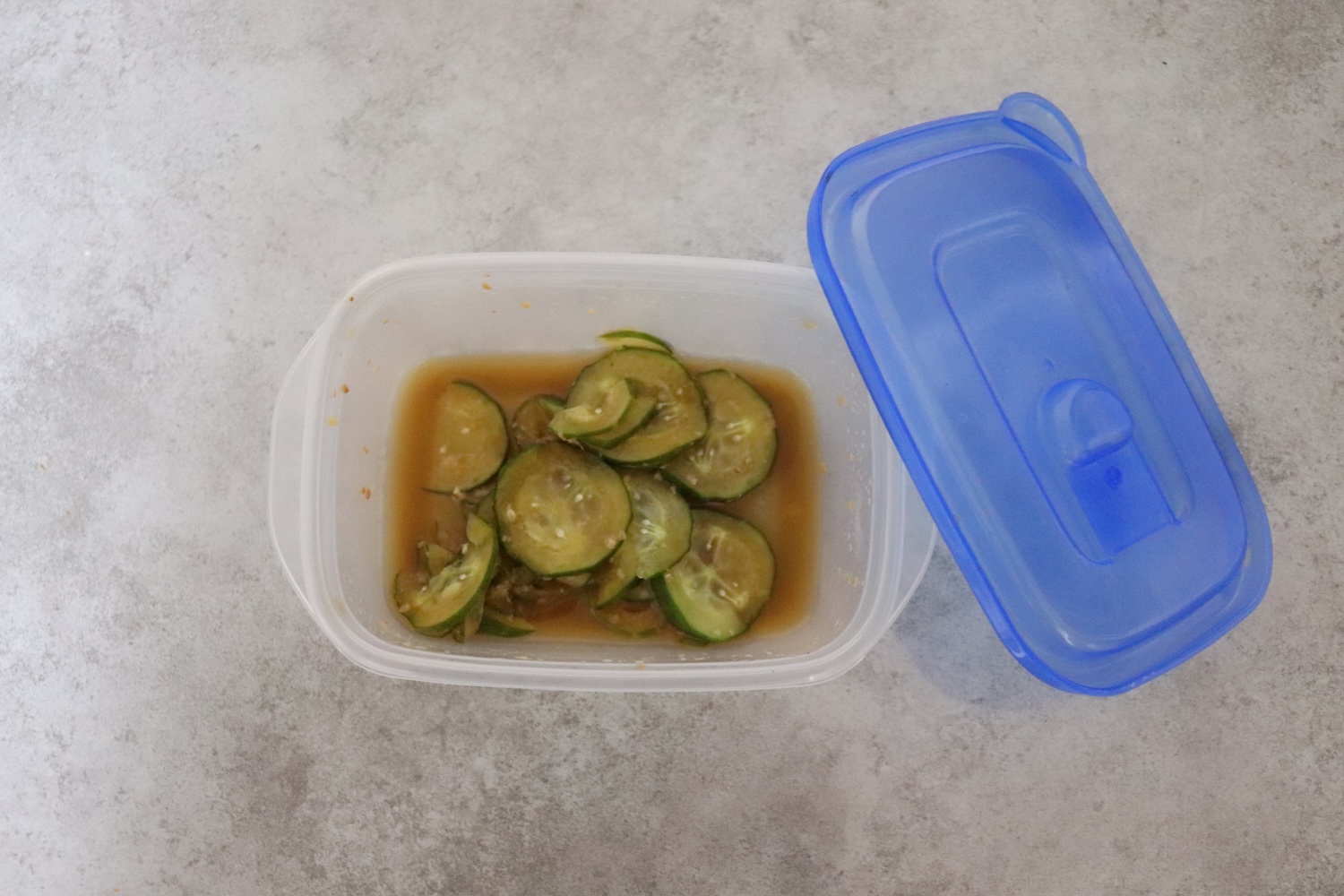
This cucumber salad is sunomono, a Japanese vinegar dish defined by restraint—and a classic sunomono recipe that focuses on texture rather than intensity.
The cucumber remains crisp, its structure intact, while depth quietly settles through time.Rather than announcing acidity, this dish allows flavor to move inward. The crunch stays clear; umami appears without emphasis.
As a traditional sunomono recipe, sourness is not meant to lead, but to hold—revealing how Japanese fermentation supports texture and taste without drawing attention to itself.
Japanese Cucumber Sunomono (Rice Vinegar Cucumber Salad)
Ingredients
Method
- Prepare the cucumbers Slice the cucumbers thinly. Sprinkle lightly with salt and gently massage. Let rest for 5 minutes, then squeeze out excess moisture. This step keeps the cucumber salad crisp and prevents excess water from diluting the dressing.
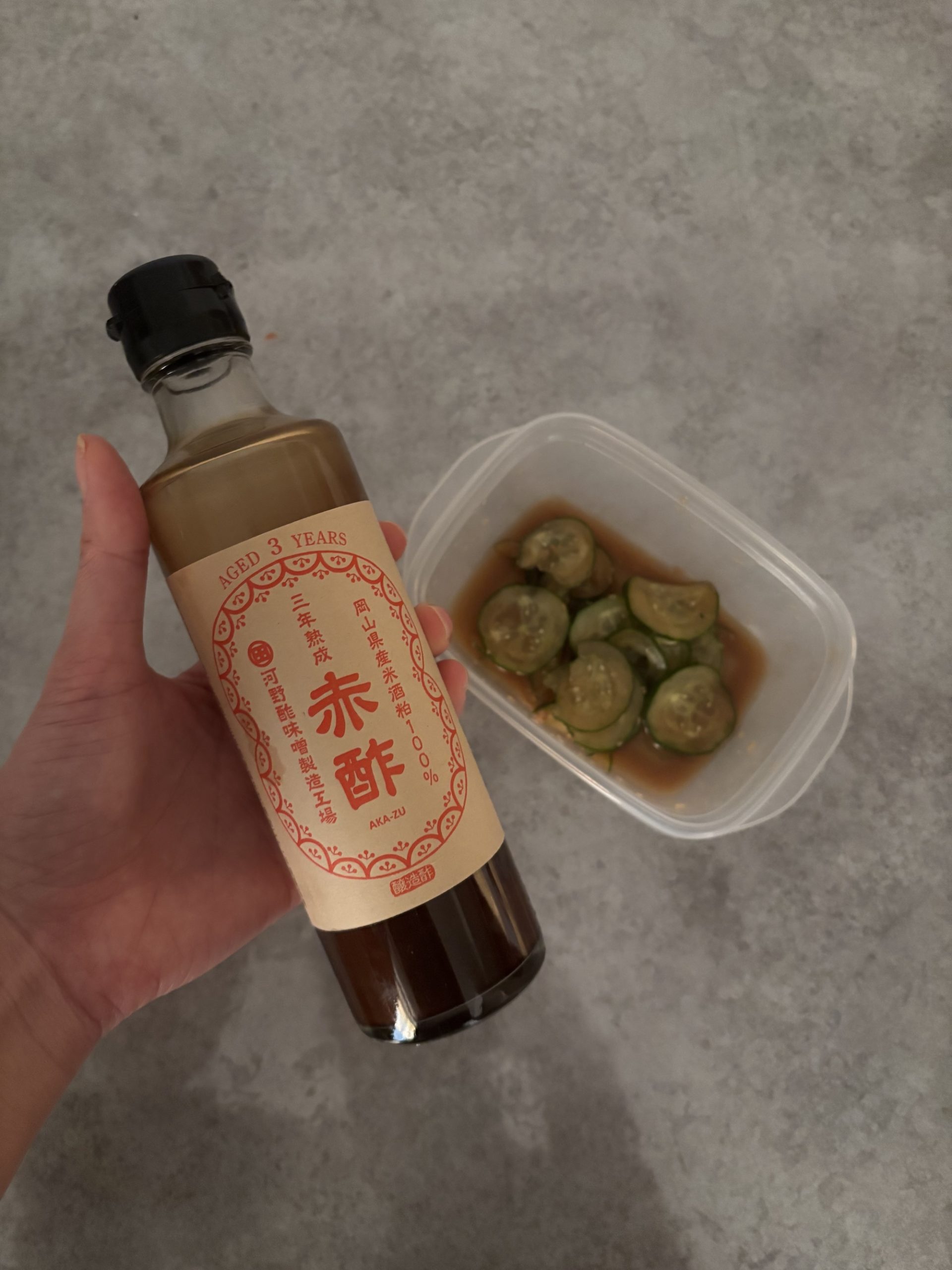
- In a small bowl, combine red vinegar and Amazake. Stir until the sugar is fully dissolved. The dressing should taste softly acidic, not sharp.
- Add the cucumbers to the dressing and gently toss to coat. Let the cucumber sunomono rest for 60 minutes so the flavors can settle. *The flavor will develop after an hour or more, but the flavor will be more fully developed if you let it rest for at least a day.
Notes
Fermentation Tip
Red vinegar (aka-zu) is a type of vinegar made from sake lees that have been aged for three years or longer. Compared to naturally fermented rice vinegar, it tends to express richer umami and sweetness, with acidity that is more settled and less sharp. In this recipe, allowing the cucumber to rest with the red vinegar for more than one day further softens the edges of acidity. Over time, the vinegar penetrates more deeply, resulting in a dish where the cucumber remains crisp while carrying the red vinegar’s depth of flavor throughout. All “ 耀 Hikari” recipes use naturally fermented seasonings made using traditional methods. If you use machine-made seasonings, use 1.2 to 1.5 times the amount of seasoning.Serving Notes
- Taste and adjust if needed. Garnish lightly, keeping the dish simple and clean.
- Serve slightly chilled for a clean, refreshing finish.
- Pair with grilled fish, tofu dishes, or simple grain-based meals.
- This cucumber salad works well as a palate cleanser between richer dishes.
- Keep portions small—sunomono is meant to support the meal, not dominate it.
Continue Exploring Japanese Fermentation
If this cucumber salad lingered on your palate, there is more waiting beyond the recipe.
Japanese fermentation reveals itself slowly—through time, restraint, and the quiet choices made in everyday cooking. Naturally fermented seasonings carry not only flavor, but traces of place, process, and patience.
If you would like to continue this exploration, our newsletter offers seasonal reflections, recipes, and observations from within Japanese fermentation culture.
And for those drawn to experience it more directly, we also share opportunities for focused culinary study and immersive fermentation experiences, Traditional style cooking class, Making and Cooking Amazake in Japan.
No responses yet