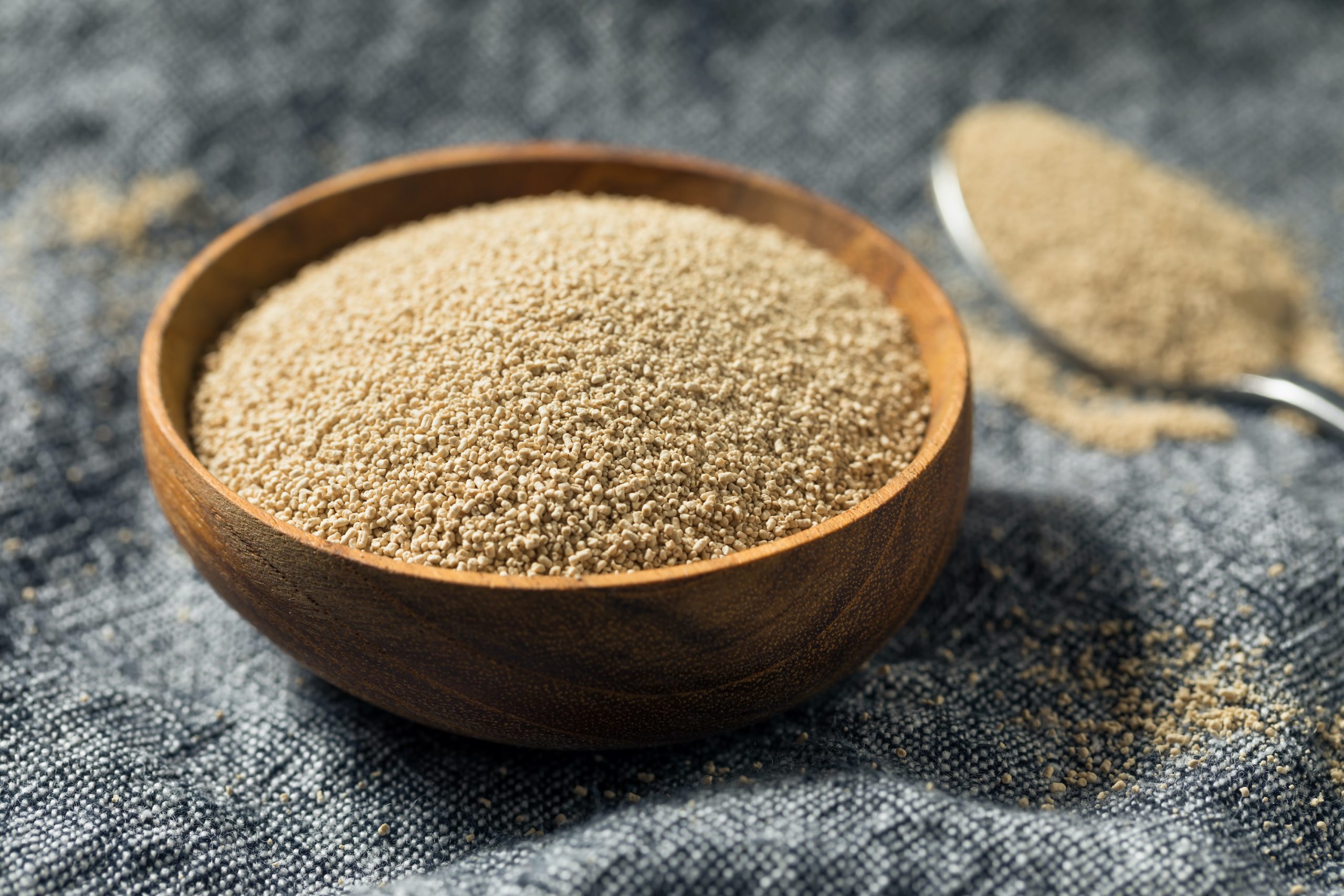
Fermentation With Yeast, Seen Through Japanese Fermentation Philosophy
Fermentation with yeast is widely recognized as a process in which yeast consumes sugars and produces alcohol, aroma, and complexity. This understanding is correct—but incomplete when applied to Japanese fermentation.
In Japanese food culture, yeast does not function in isolation. Its role only becomes meaningful after fermentation has been made possible. That possibility is created by koji.
The defining feature of Japanese fermentation is not how yeast behaves, but how the system prepares for yeast to act. This article explains fermentation with yeast by first clarifying that system—where koji comes first, and yeast follows.
What Is Fermentation With Yeast?
Fermentation with yeast refers to a biological process in which yeast consumes already available fermentable sugars and converts them into alcohol, carbon dioxide, and aromatic compounds. This function of yeast is universal and does not change between cultures.
What matters most is whether those sugars are present in a form yeast can use at the start.
In raw materials such as grapes, apples, ripe berries, and sugarcane, fermentable sugars already exist in simple forms like glucose and fructose. Because these sugars are immediately accessible, yeast fermentation can begin as soon as yeast is present—whether added intentionally or occurring naturally in the environment.
Honey is another interesting example. It contains a very high concentration of simple sugars, mainly glucose and fructose. When diluted with water and fermented by yeast, honey produces mead, one of the oldest known fermented alcoholic beverages. This further illustrates that yeast does not create sugar; it transforms sugar that already exists.
In all of these cases, fermentation with yeast can begin directly because no prior conversion step is required.
Fermentation With Yeast and Sugar — Sugars That Exist vs Sugars That Are Created
To understand fermentation with yeast and sugar, it is important to clarify what “sugar” actually means in fermentation.
Not all carbohydrates are the same. Fruits contain sugars such as glucose and fructose in their raw state. These are small, simple molecules that yeast can consume immediately. This is why fruits can ferment directly once yeast is present.
Grains and legumes, on the other hand, store carbohydrates primarily as starch. Starch is a large, complex molecule that yeast cannot use. Even though grains are rich in carbohydrates, they contain no fermentable sugar in a usable form at the beginning.
This is where Japanese fermentation diverges.
In Japanese fermentation, starch-rich ingredients like rice or soybeans are first treated with koji. Koji produces enzymes that break starch down into simple sugars. Only after this conversion does fermentation with yeast and sugar become possible.
In other words:
- Fruit-based fermentations, for example, rely on naturally occurring sugars
- Grain-based Japanese fermentations rely on enzymatically produced sugars
Fermentation with yeast and sugar functions the same way in both cases. What differs is how sugar becomes available.
Fermentation With Yeast Compared to Other Fermentation Methods
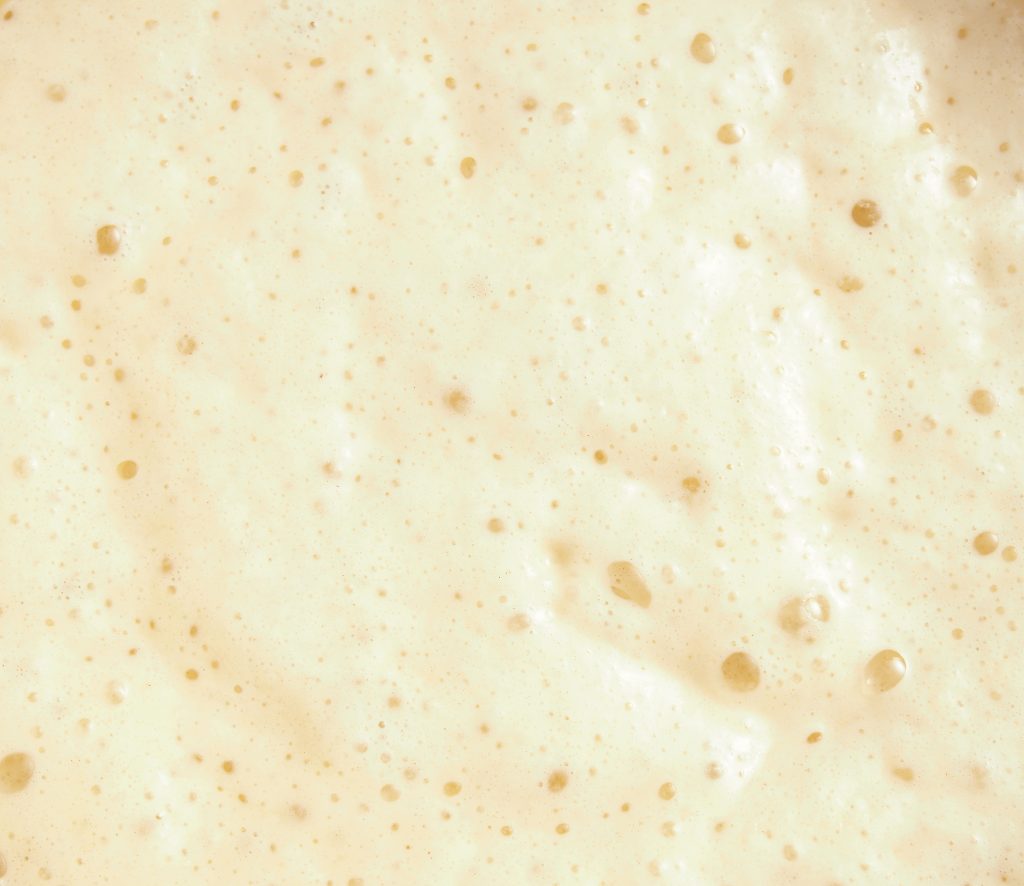
Fermentation with yeast is often discussed as if it were the standard model of fermentation. In reality, it represents just one microbial strategy among many. Comparing yeast fermentation with other fermentation methods helps clarify what yeast uniquely contributes—and what it does not.
At its core, yeast fermentation is defined by alcoholic metabolism. Yeast converts fermentable sugars into alcohol, carbon dioxide, and a range of aromatic byproducts. This process is fundamentally different from lactic acid fermentation, where bacteria convert sugars into acids, or enzymatic fermentation, where microorganisms primarily break down complex compounds without producing alcohol.
In lactic acid fermentation, such as yogurt, kimchi, or sauerkraut, the defining transformation is acidity. The primary outcome is preservation and sourness, not aroma complexity. Texture changes and protein breakdown often play a larger role than volatile aromatic compounds.
In contrast, koji-based fermentation—central to Japanese food culture—relies first on enzymatic activity, not microbial metabolism. Koji mold breaks down starches and proteins into sugars and amino acids. Only after this transformation can yeast or bacteria meaningfully contribute, and even then, their role depends on the product.
What distinguishes fermentation with yeast, then, is not its universality, but its specificity. Yeast excels at shaping aroma and alcoholic character, while other fermentation methods define structure, acidity, umami, and texture. Understanding these differences prevents yeast from being misunderstood as the driver of all fermentation outcomes.
The Role of Fermentation With Yeast in Japanese Food Culture
In Japanese fermentation, yeast is neither ignored nor idolized. Its role is clearly defined—and carefully positioned within a broader system.
The clearest example of yeast as a primary contributor is sake. In sake brewing, yeast plays a central role in aroma development. Floral, fruity, and elegant aromatic profiles emerge through yeast metabolism, much like in wine. Different yeast strains are evaluated, compared, and refined precisely because aroma is a defining quality of the final product.
However, even in sake, yeast does not act alone. Its work is only possible because koji has already converted rice starch into fermentable sugars. From a Japanese perspective, yeast expresses character, but koji creates possibility.
In contrast, in fermented seasonings such as miso and soy sauce, yeast plays a supporting role. These products are not defined by alcohol or yeast-driven aroma. Instead, long-term enzymatic breakdown, amino acid formation, and interactions among multiple microorganisms shape their identity.
Here, yeast contributes subtle aromatic depth and maturation complexity, but it does not lead. Its presence often comes from the environment—wooden barrels, production spaces, and time—rather than deliberate inoculation. This reflects a philosophy in which fermentation is guided, not dominated.
This distinction highlights a key feature of Japanese fermentation culture: microorganisms are valued for their relationships, not their individual dominance. Yeast is respected for what it does best, and restrained where it does not belong.
Why Chefs and Food Creators Explore Fermentation With Yeast
For chefs and food professionals, fermentation with yeast is not a novelty. What Japan offers is a different conceptual framing.
Studying fermentation in Japan reveals that:
- yeast is not the starting point
- flavor is not the goal
- time is not an obstacle but a material
These ideas are difficult to absorb through recipes or manuals alone.
For chefs and food creators interested in exploring Japanese fermentation beyond theory, programs inspired by the 耀 Hikari philosophy offer an introduction to fermentation as a living system—where koji, yeast, and time are understood through practice and cultural context. Study abroad
Fermentation With Yeast Within the Broader Japanese Fermentation Tradition
Fermentation with yeast is powerful, expressive, and indispensable in many food cultures. Yet when viewed through the lens of Japanese fermentation, it becomes clear that yeast is not a universal solution, nor the starting point of all fermented foods.
In Japan, fermentation begins with transformation—often through koji—before yeast is invited to participate. Sugars are created before they are consumed. Systems are designed before flavors are expressed. This layered approach reveals fermentation not as a single technique, but as a philosophy of balance.
For food professionals and creators, understanding fermentation with yeast in this context offers more than technical knowledge. It provides a framework for thinking about ingredients, microorganisms, and time as interconnected elements rather than isolated tools.
By placing yeast within a larger fermentation ecosystem, Japanese food culture offers a perspective that deepens both craft and creativity—whether one is brewing, cooking, or simply learning how fermentation truly works.
To continue exploring Japanese fermentation—from foundational concepts to practical applications—consider joining our newsletter. You will receive insights into fermentation philosophy, ingredient thinking, and how Japanese fermented foods are designed, not just produced.
No responses yet