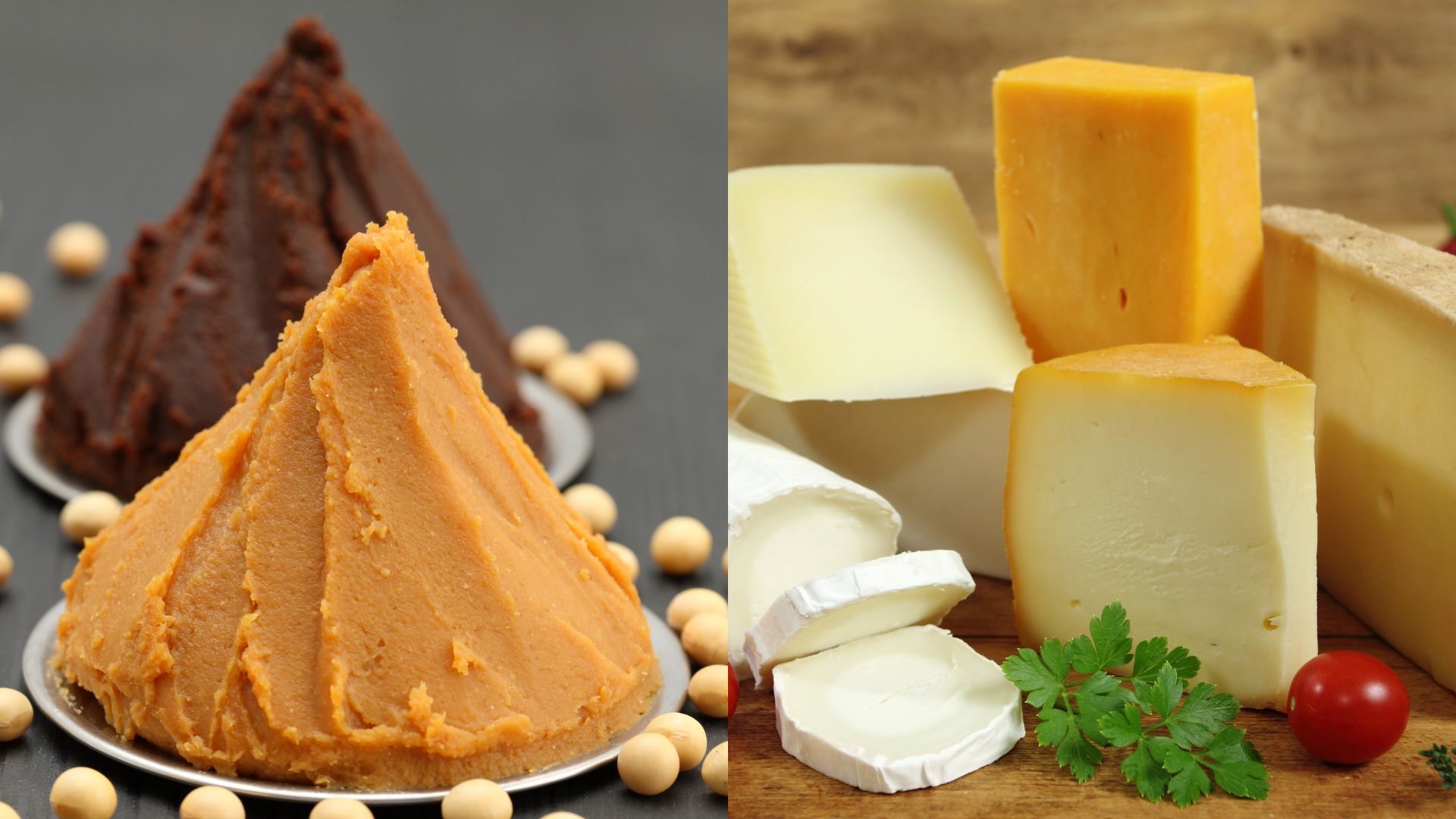
Miso and cheese represent two iconic fermentation traditions: one soy-based, one dairy-based. Although both rely on the transformative power of microbes, their “aging philosophies,” techniques, and flavors differ dramatically. This guide explores miso fermentation vs cheese fermentation from scientific, culinary, and cultural angles—giving you a clear understanding of soy vs dairy fermentation and inspiring you to explore Japanese fermented foods more deeply.
What Is Miso Fermentation? The Essential Soy-Based Method
Miso is a classic example of soy fermentation, where soybeans are inoculated with koji (Aspergillus oryzae), mixed with salt, and aged for months to years. Unlike dairy fermentation—which relies heavily on lactic acid bacteria—miso fermentation centers on enzymatic breakdown. Koji produces powerful amylases and proteases that slowly decompose soy proteins and carbohydrates into amino acids, peptides, and sugars. This enzymatic “deep aging” creates miso’s layered umami, gentle sweetness, and long-lasting aroma. If you want a more detailed breakdown of koji biology or how it differs from yeast- or sourdough-based fermentations, see our dedicated article on Koji vs Sourdough: Scientific, Culinary, and Fermentation Differences.(記事リンク)
What Is Cheese Fermentation? The Classic Dairy Aging Method
Cheese fermentation is rooted in dairy fermentation, where milk is inoculated with lactic acid bacteria and rennet. These microbes convert lactose into lactic acid, curdling the milk and forming a dense matrix of fat and casein. After pressing, salting, and shaping, cheese is aged using specific bacterial or fungal cultures—such as Brevibacterium linens, Penicillium camemberti, or Penicillium roqueforti—depending on the cheese style. While miso fermentation relies on enzymatic breakdown from koji, cheese aging is heavily shaped by acidification, moisture control, rind development, and microbial succession. The result: entirely different aromas and textures, from soft bloom-rind cheeses to sharp hard cheeses.
Miso (Soy Fermentation) vs Cheese (Dairy Fermentation): Scientific Differences
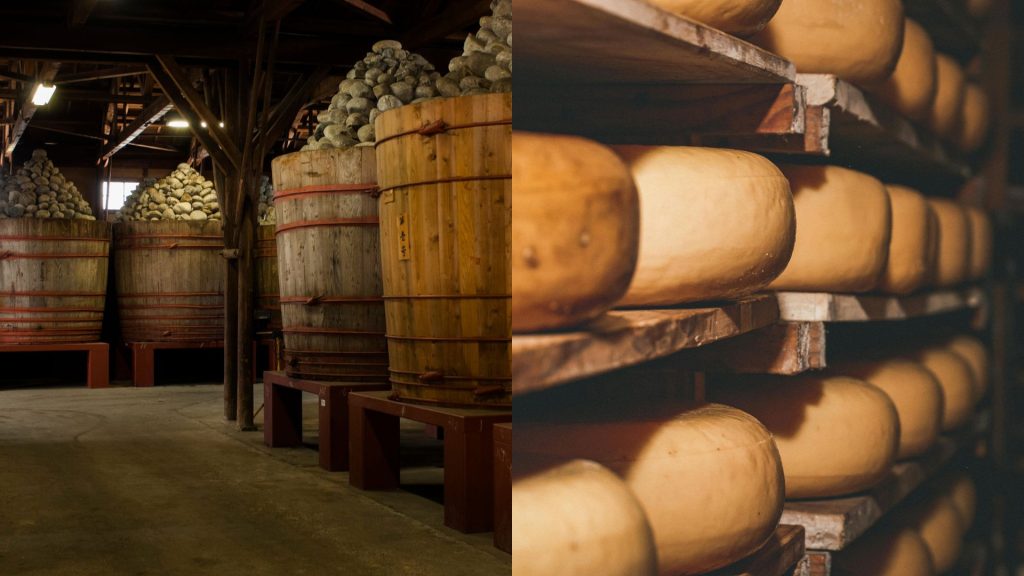
Understanding miso (soy fermentation) vs cheese (dairy fermentation) requires examining how soy- vs dairy-based substrates behave under microbial transformation. Although both miso and cheese are “fermented and aged foods,” their scientific foundations diverge in three key ways:
Microbial Starter: Koji vs Lactic Acid Bacteria
Koji is a filamentous fungus that penetrates soybeans, producing enzymes that break down proteins and carbohydrates. Cheese, in contrast, uses lactic acid bacteria that lower pH and shape texture through acidification. This distinction explains why miso develops savory complexity while cheese forms tangy, creamy profiles.
Substrate Composition: Soy Proteins vs Milk Casein and Fat
Soybeans contain high protein and minimal fat, while milk contains abundant fat and casein. As a result, soy fermentation generates intense umami through amino acid release, whereas dairy fermentation emphasizes fat oxidation, aroma development, and creamy mouthfeel.
Aging Philosophy: Enzymatic Deep Aging vs Controlled Acidification and Rind Ecology
Miso aging is a slow, uniform internal process driven by koji enzymes. Cheese aging often occurs from the outside inward, influenced by rind microbes and cave environments. In other words: miso ages “through decomposition,” while cheese ages “through transformation of acidity, moisture, and surface ecology.” These contrasting philosophies shape everything from texture to aroma intensity.
Practical Guide: How to Use Miso and Cheese Together
Although miso (soy fermentation) and cheese (dairy fermentation) come from different culinary histories, they pair exceptionally well. Their shared umami, aging depth, and microbial complexity allow for creative combinations—from miso butter melted over grilled halloumi to a white miso glaze paired with soft goat cheese.
You can also explore soy vs dairy fermentation in fusion applications: miso elevates creamy dishes, cuts through richness, and brings elegant savory notes to cheese-based sauces or dips. This cross-cultural pairing showcases how aging philosophies can harmonize on a single plate.
If you’re curious about integrating Japanese fermented foods into your cooking, consider joining our fermentation-focused cooking experiences and cooking study abroad in Kyoto. They provide hands-on guidance and sensory training in miso, soy sauce fermentation, and more.
Two Fermentation Traditions, One Fascinating Discovery Journey
Exploring miso fermentation vs cheese fermentation reveals how different substrates—soy vs dairy—produce completely different outcomes through microbial transformation. Both traditions reflect deeply rooted philosophies: enzymatic decomposition and umami-building in Japan, and microbial acidification and rind culture development in Europe. Understanding these processes not only clarifies scientific differences but also enriches your appreciation for fermented foods as cultural heritage.
If you want to continue learning, our newsletter delivers monthly insights on Japanese fermentation techniques, ingredient stories, and culinary philosophy. It is an excellent next step for readers inspired by this article.
No responses yet